On June 23, 2026, the AIMS (AI in Medicine at Scale) Lab of the Zhou Hongyu research group at the School of Biomedical Engineering, Tsinghua University, published online in Nature Biomedical Engineering the paper “Large reasoning models as thinking machines for medicine.” This paper is the first to propose the theoretical framework of “Medical Reasoning AI,” providing systematic support for the translational pathway of a new generation of AI models centered on Large Reasoning Models (LRMs) toward clinical practice. The sole corresponding author of the paper is Assistant Professor Hongyu Zhou of Tsinghua University. Collaborators include leading scholars in the field of medical AI from institutions such as Beth Israel Deaconess Medical Center, Harvard Medical School, and Scripps Research.
1. Research Background
Large Reasoning Models share the same underlying architectural lineage as the previously widely used Large Language Models (LLMs), but their working mechanisms differ fundamentally: LLMs usually output answers directly, and their internal computation processes are difficult for users to inspect; LRMs, before giving a final conclusion, first generate an explicit, multi-step intermediate reasoning process, commonly known as the “chain of thought.”
This characteristic enables LRMs to demonstrate advantages in tasks that rely on rigorous logical deduction, such as mathematical proofs and code generation.
Clinical medical decision-making relies heavily on systematic evidence integration and transparent reasoning. Physicians’ diagnostic and therapeutic actions themselves also include knowledge retrieval, self-verification, and in-depth analysis of difficult cases, which aligns well with the design logic of reasoning models. Recommendations given by existing medical AI systems usually appear merely as a conclusion plus a confidence score, and the basis for their reasoning is difficult for physicians to inspect. As a result, trust building and responsibility attribution have become common problems. LRMs can present a complete, step-by-step reasoning chain, providing a new technical pathway to address this problem. This is also the starting point for the Medical Reasoning AI (MRAI) framework proposed in this paper.
2. Core Question: Is Reasoning Transparency Equivalent to Trustworthy Results?
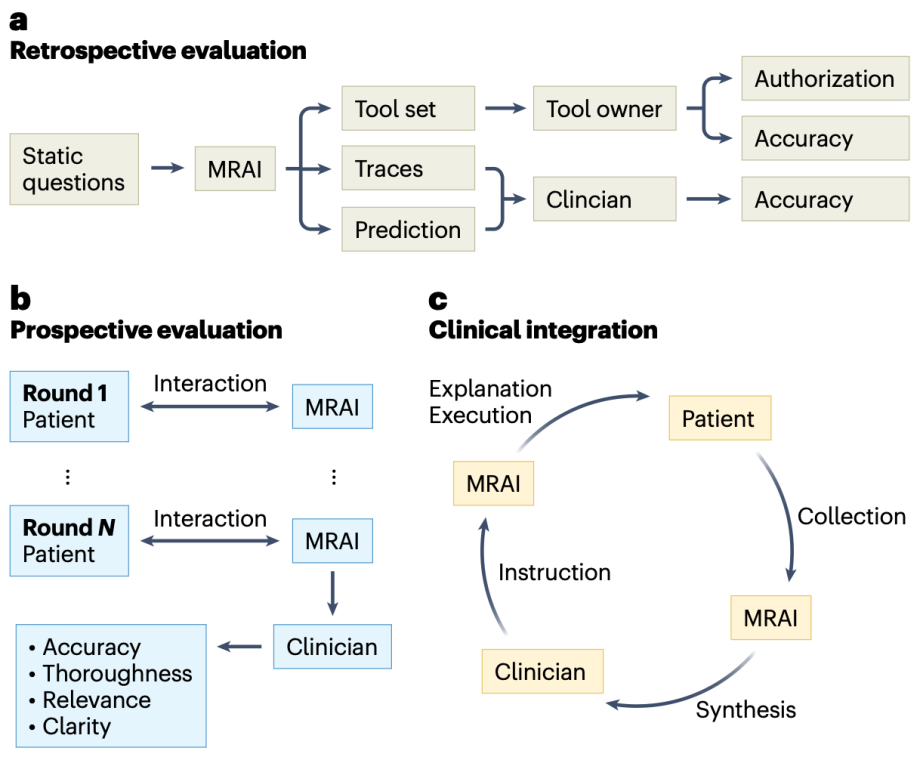
Figure 1: Implementation pathway of Medical Reasoning AI.
The paper further explores a key question: Does a fully presented reasoning chain inherently bring higher credibility?
For systems that output only conclusions, physicians’ verification cost is relatively limited. For example, by looking at a chest X-ray, one can judge whether the conclusion “pneumonia detected, confidence 87%” is reasonable. For systems that present a complete reasoning chain, however—for example, around manifestations such as fever, altered consciousness, and neck stiffness, gradually differentiating the possibility of bacterial versus viral infection, assessing travel history and immune status, and ultimately giving recommendations for lumbar puncture and empiric antibiotic therapy—what physicians need to review is no longer a single value, but several interrelated, progressively advancing judgment steps. The paper finds that a model may well produce a correct conclusion with flawed reasoning logic, or the opposite. In such cases, simple result checking is no longer sufficient to ensure clinical safety.
The paper also points out an easily overlooked potential risk: review fatigue. In high-burden clinical scenarios such as emergency care and imaging diagnosis, if physicians are exposed to structurally complex reasoning chains for a long time, they may tend to relax review standards and fail to adequately scrutinize the explanations given by the system. This finding indicates that achieving explainability is not without cost: it essentially shifts the validation cost originally concentrated in the algorithm development stage to every interaction during clinical use. Without corresponding institutional arrangements to constrain it, this shift may instead weaken the safety of the system.
3. Defining Medical Reasoning AI: Three Verifiable Design Principles
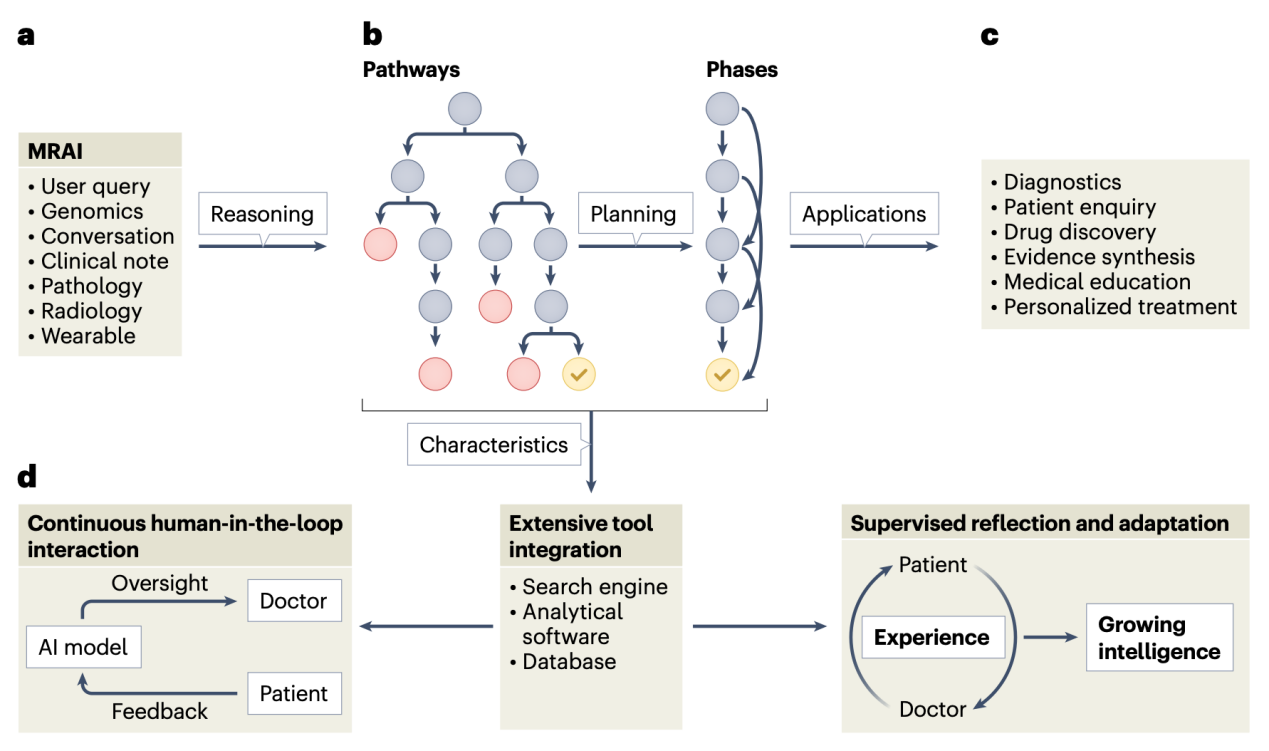
Figure 2: Key characteristics of Medical Reasoning AI.
To address the above validation cost problem, the paper proposes a clear response: it defines Medical Reasoning AI by three verifiable core characteristics, as an institutional design to constrain and share validation costs, distinguishing it from the general notion of human-AI collaboration.
First, continuous human-in-the-loop interaction. This is the most fundamental and most important criterion for Medical Reasoning AI. When encountering diagnostic uncertainty or rare cases, the system should proactively pause and seek the clinical physician’s judgment, rather than relying on uncertain reasoning to proceed on its own. For example, when laboratory results suggest an atypical presentation, the system should pause and request physician interpretation rather than giving a conclusion on its own. At the same time, physicians are not merely passive recipients of output; they review the complete reasoning chain before key decisions are executed. Patients also play a role in this mechanism: when the illness description is vague or information is incomplete, the system should proactively ask targeted questions to obtain key details; post-treatment patient outcomes should also serve as feedback to help physicians judge whether the previous reasoning path was reasonable and to provide a basis for future system improvement. This bidirectional flow of information keeps Medical Reasoning AI positioned as a collaborative tool within the clinical workflow, rather than an autonomous decision-maker.
Second, coordinated orchestration of extensive medical tools. Unlike traditional AI that relies on static knowledge bases, Medical Reasoning AI needs to dynamically integrate heterogeneous resources such as electronic medical records, real-time laboratory systems, specialty databases, and clinical guidelines, completing evidence synthesis within a single reasoning framework. This means not only passively retrieving information but also actively invoking specialized analytical tools such as pharmacokinetic calculations, genetic variant interpretation, and risk prediction models, embedding these capabilities into the clinical reasoning process itself. For example, when facing a patient with complex symptoms, Medical Reasoning AI should be able to simultaneously review prior medical records, search PubMed for relevant case reports, check drug interaction databases, and track pending laboratory results, thereby providing evidence-based recommendations that take all available information into account.
Third, supervised reflection and adaptation. Unlike static models whose behavior remains unchanged after deployment, Medical Reasoning AI should have the ability to review past decisions, identify reasoning patterns, and propose improvement plans. For example, when a diagnostic conclusion is later confirmed or refuted, the system can trace back the reasoning chain at that time, judge whether its logic was reasonable, and identify whether there is a systematic judgment bias, such as insufficient feature weighting for a certain type of atypical presentation. However, it should be emphasized that such improvement suggestions would not be automatically adopted; they must be submitted to physicians to evaluate whether they conform to clinical guidelines and are supported by sufficient evidence, and can only be integrated into the system after explicit approval. This mechanism both allows Medical Reasoning AI to continuously evolve with accumulated experience and ensures that such evolution is always based on expert validation, avoiding erroneous patterns being reinforced without supervision.
4. Technical Pathways and Implementation Challenges
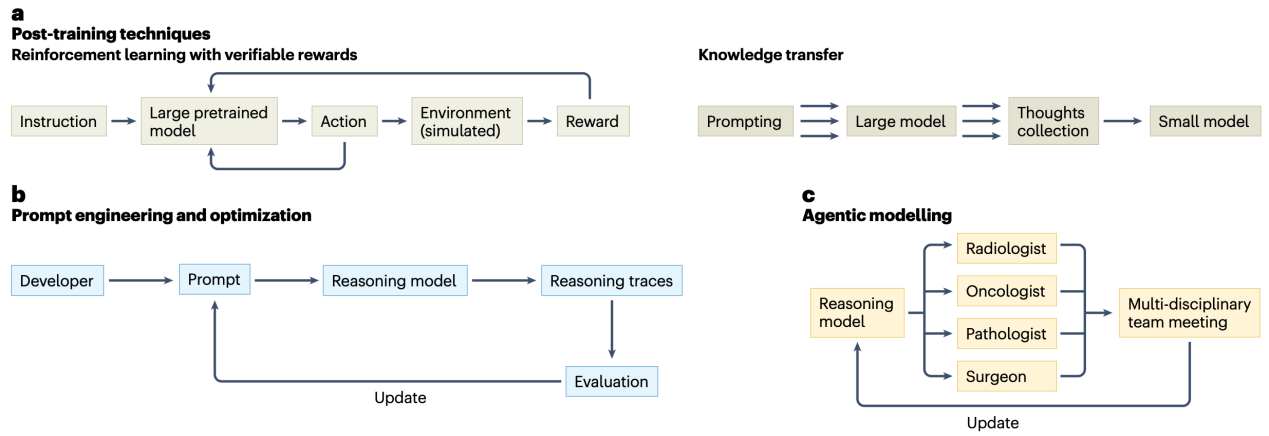
Figure 3: Technical pathways of Medical Reasoning AI.
On the basis of this clear definition, the paper systematically outlines the key technical pathways needed to build Medical Reasoning AI, including post-training methods based on reinforcement learning with verifiable rewards, prompt engineering and optimization strategies for clinical scenarios, and modeling frameworks that support multi-agent collaboration. It further proposes a complete implementation pathway from retrospective evaluation and prospective evaluation to clinical workflow integration.
The paper also discusses practical regulatory challenges that Medical Reasoning AI may face. Taking the current de novo approval pathway of the U.S. Food and Drug Administration as an example, its institutional design is based on the assumption that algorithm behavior remains fixed after approval. However, the reasoning approach of Medical Reasoning AI systems continuously adjusts with the accumulation of clinical experience; for example, after handling a rare case, it may improve its judgment logic in subsequent similar cases. This means the current regulatory framework may need to transition toward continuous safety monitoring and dynamic update approval mechanisms. In addition, the paper systematically discusses related issues such as data privacy protection, determination of responsibility attribution, and patient informed consent.
5. Conclusion
This paper provides a relatively systematic analytical framework for understanding the application prospects of large reasoning models in medicine. Its core contribution lies in clearly pointing out that explainability is not without cost, and a true Medical Reasoning AI system needs to achieve an institutional balance between transparency of the reasoning process and controllable validation costs. This framework also provides a referable theoretical starting point for subsequent research on reasoning verifiability evaluation, clinical safety regulation, multi-agent collaboration, and other directions. At present, the research group is conducting further research around the above directions, welcomes exchanges and collaboration from peers in related fields, and welcomes citation and discussion of the views of this paper in subsequent research. The full content of the paper and detailed literature discussion can be found in the original article.
Original paper link: https://doi.org/10.1038/s41551-026-01701-y
6. About the Laboratory
AIMS Lab (AI for Medicine at Scale) was founded in 2025 and is affiliated with the School of Biomedical Engineering, Tsinghua University. It focuses on fundamental AI algorithm research and clinical translational applications in the biomedical field. The lab’s core research directions include multimodal medical foundation models, clinical reasoning AI, and individualized intelligent modeling, among other frontier topics, and it is committed to promoting deep integration of AI technology with clinical medical practice. Hongyu Zhou’s related research findings have been published in international academic journals such as Nature Medicine, Nature Biomedical Engineering, Nature Machine Intelligence, NEJM AI, and IEEE TPAMI.