The Brain Imaging Lab of the Qiyuan Tian Research Group at the School of Biomedical Engineering, Tsinghua University, has published a research article online in Medical Image Analysis titled “No modality left behind: Adapting to missing modalities via knowledge distillation for brain tumor segmentation.”
Addressing the common problem of missing modalities in clinical multimodal magnetic resonance imaging (MRI), the study proposes AdaMM, a brain tumor segmentation framework that can deliver stable and accurate tumor-region segmentation even when different MRI sequences are unavailable. The paper’s co-first authors are Shenghao Zhu, a visiting intern in the Lab, and Yifei Chen, a PhD student at the School of Biomedical Engineering, Tsinghua University. The corresponding authors are Associate Professor Qiyuan Tian of the School of Biomedical Engineering, Tsinghua University, and Professor Feiwei Qin of Hangzhou Dianzi University.

Figure 0. Online publication page of the article
Accurate brain tumor segmentation is an essential foundation for preoperative assessment, radiotherapy planning, and personalized treatment. Multimodal MRI provides complementary information from different sequences. For example, T1, T2, contrast-enhanced T1, and FLAIR images reflect anatomical structure, tissue edema, tumor enhancement, and the extent of abnormal signals, respectively. In real clinical settings, however, complete multimodal MRI data are not always available because of factors such as scan time, patient condition, restrictions on contrast-agent use, and equipment constraints. Many existing deep learning models rely on complete modality inputs; when key sequences are missing, their segmentation performance often drops markedly, limiting clinical translation and application.
To address this challenge, the study introduces the AdaMM framework, guided by the core idea of “No modality left behind,” to improve model robustness under missing-modality conditions. Through knowledge transfer from a complete-modality teacher model to a missing-modality student model, AdaMM enables the model to make full use of available imaging information and perform brain tumor segmentation even when only part of the MRI sequences are provided. In addition, AdaMM incorporates graph-structured feature modeling and lesion-presence constraints, further enhancing the model’s adaptability to different modality combinations and reducing false-positive predictions in missing-modality scenarios.
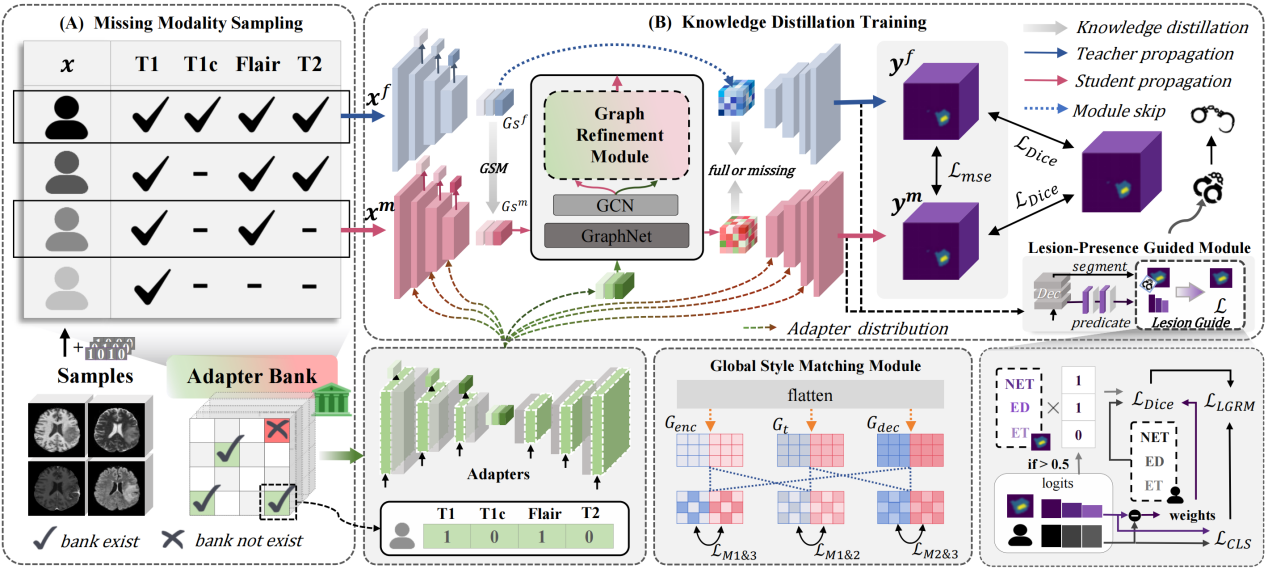
Figure 1. Overview of the AdaMM framework
The researchers systematically validated AdaMM on three datasets: BraTS 2024, BraTS 2018, and Pretreat-MetsToBrain-Masks, covering different scenarios such as brain glioma and brain metastases. The experiments simulated 15 MRI modality combinations, including single-modality, dual-modality, three-modality, and complete-modality inputs, and compared AdaMM with several representative missing-modality segmentation methods. The results show that AdaMM achieved superior segmentation performance in most missing-modality scenarios, particularly demonstrating stronger stability and generalization under single-modality and weak-modality-combination conditions.
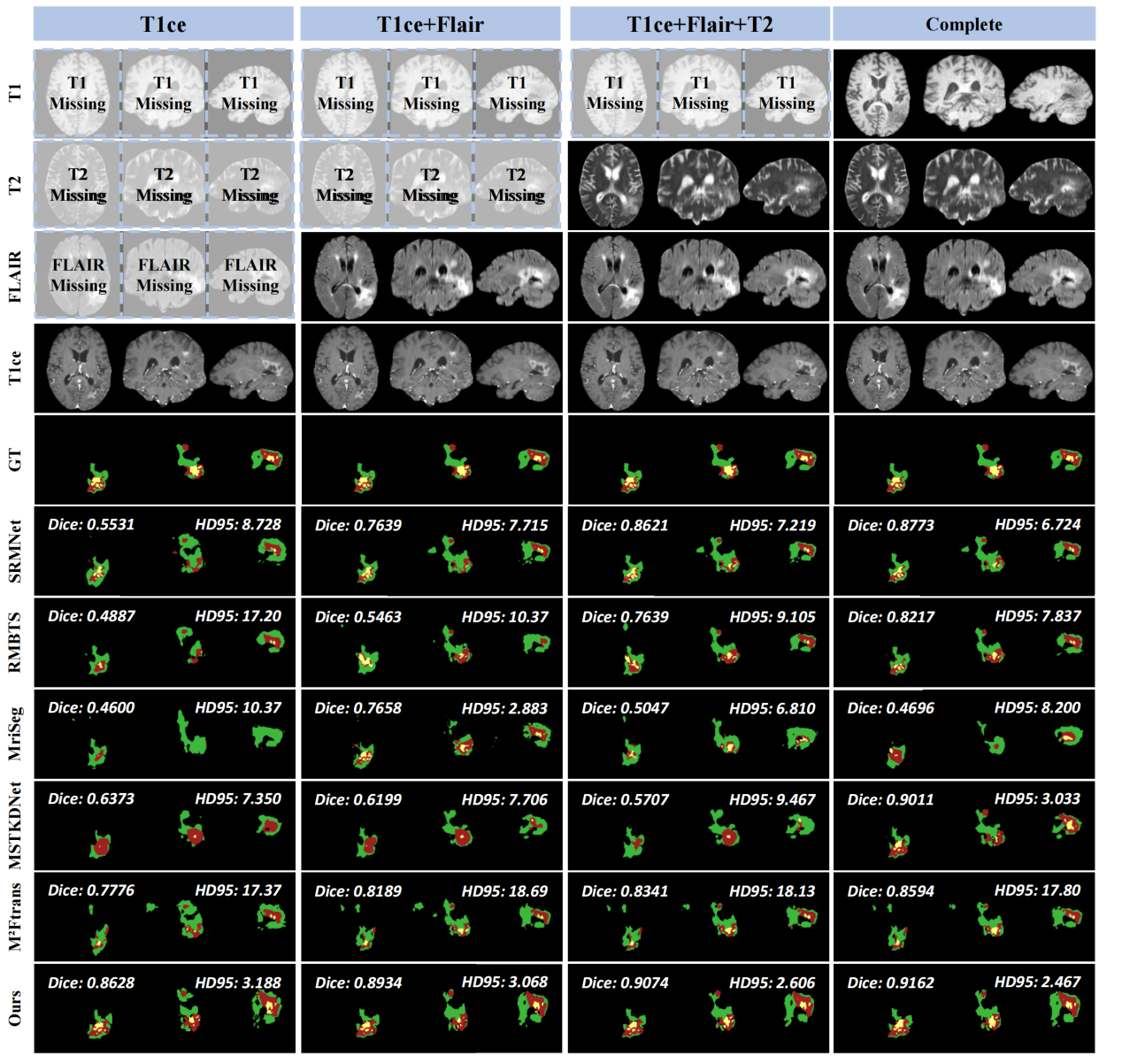
Figure 2. Segmentation results under different missing-modality scenarios
Overall, this study addresses the real-world clinical challenge of incomplete MRI data and proposes an automatic brain tumor segmentation method that combines accuracy, robustness, and practical value. AdaMM advances the development of missing-modality multimodal medical image analysis methods and provides a promising new tool for intelligent imaging analysis in brain tumor preoperative assessment, radiotherapy planning, and personalized treatment.
Link to the original paper: https://doi.org/10.1016/j.media.2026.104108